11 Indian-bound ships crossed Persian Gulf after US-Iran deal, says MEA
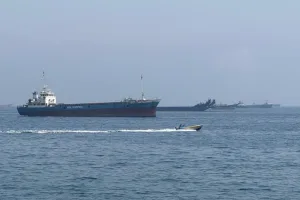
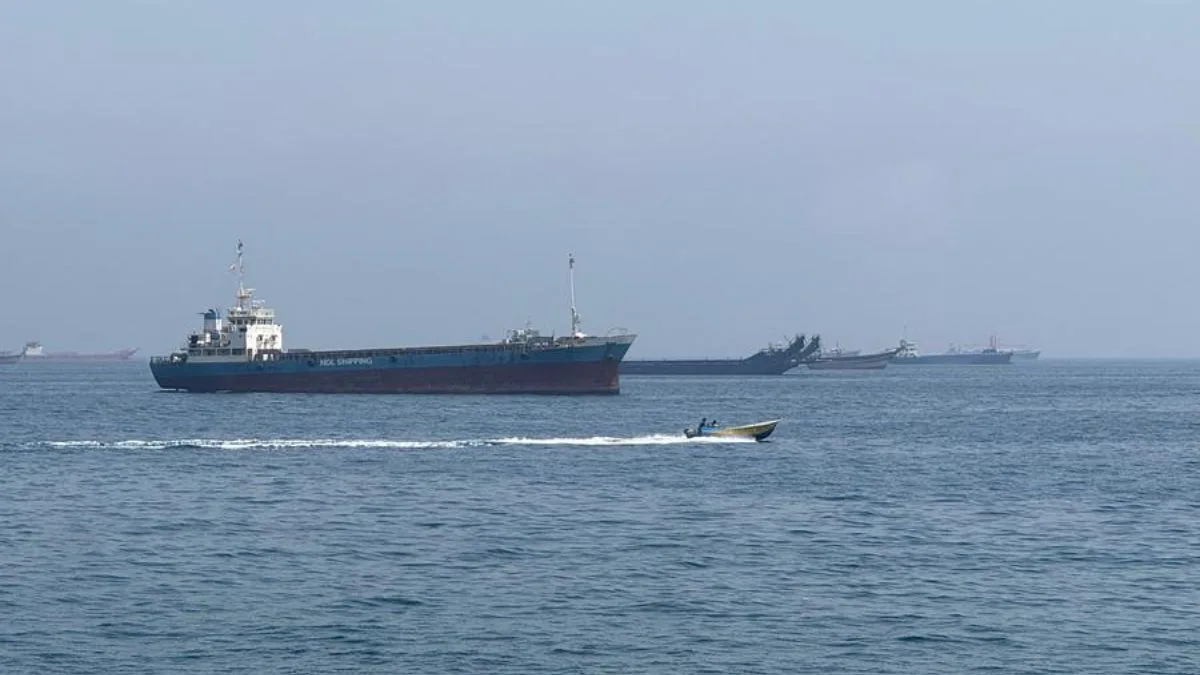
According to figures published by commodity analytics firm Kpler, around 36 resource carriers sailed through the Strait of Hormuz on Monday.
NSA Ajit Doval said India welcomed the US-Iran MoU with cautious optimism, linking it to energy security, freedom of navigation, supply chains and regional stability.




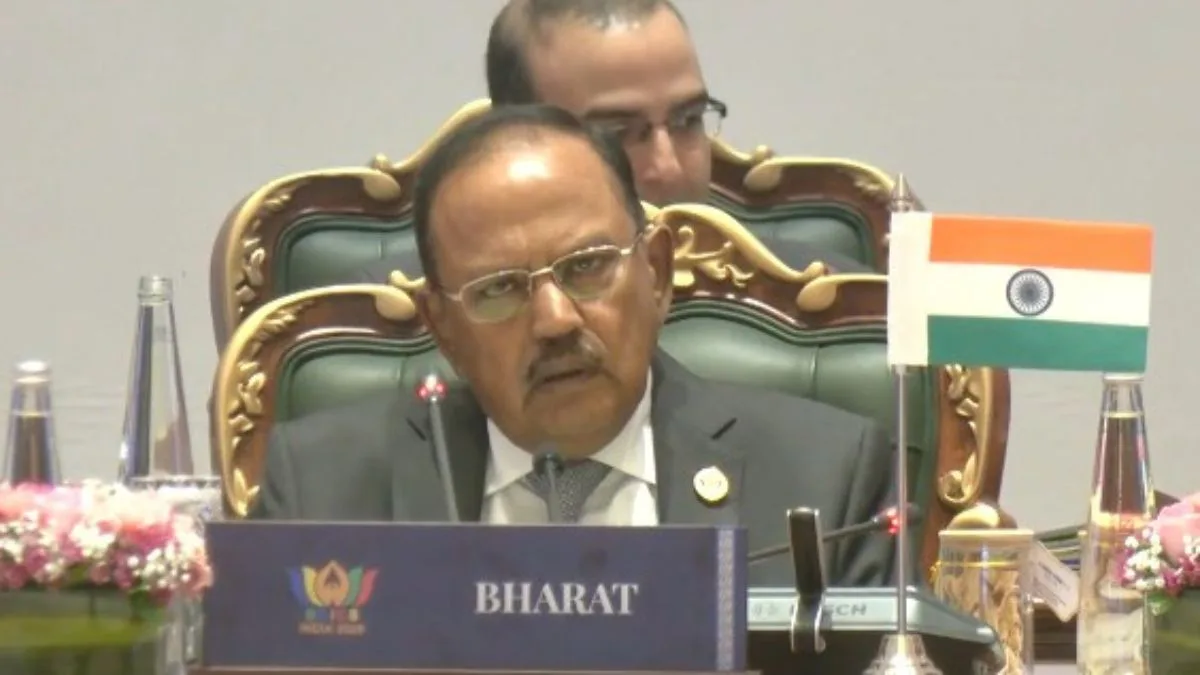
NSA Ajit Doval said India welcomed the US-Iran MoU with cautious optimism and hoped it would support energy security and freedom of navigation. | IANS
India sees the US-Iran understanding as a possible relief point for energy security, supply chains and maritime movement through the Strait of Hormuz, National Security Adviser Ajit Doval said on Tuesday.
Speaking at the 16th BRICS National Security Advisers’ Meeting in New Delhi, Doval said India welcomed the Memorandum of Understanding reached between Washington and Tehran, but viewed it with “cautious optimism”.
Advertisement
“India welcomes the MoU reached between the US and Iran. We have got cautious optimism, and we hope that it will work. It will help energy security. The opening of the Strait of Hormuz is a very welcome development,” Doval said.
Advertisement
He said the development could help ease supply pressures in key sectors.
“It will remove supply chain bottlenecks and many of the shortages in the field of say, fertilisers and chemicals, et cetera, will be met with,” he said.
Doval also underlined the economic importance of maritime access in the region.
“And the freedom of navigation that will be available to the countries in the region and beyond will probably also greatly improve our economic prosperity,” he said.
The NSA’s remarks came as India hosted top security officials from BRICS member countries for talks on global instability, terrorism, cyber threats and cooperation on security in information and communication technologies.
Doval said the world was going through a difficult phase, with military conflicts, economic strain, geopolitical uncertainty and disruptive technologies testing existing global mechanisms.
“We are meeting at a very tumultuous time. The world is beleaguered by military conflicts and complex security problems. It is facing geopolitical uncertainties, economic strains, and disruptive technology,” he said.
He warned that the institutions meant to manage crises were struggling to respond to the scale of present challenges.
“Not only that the threats are compounding, but the instruments and institutional mechanisms are increasingly finding themselves to be inadequate to resolve or mitigate these conflicts. Multilateralism is on the decline,” Doval said.
Calling BRICS a “very special coalition”, Doval said the grouping had grown from an informal platform of emerging economies into a forum with a wider responsibility in global affairs.
“BRICS was conceived as an informal grouping of emerging economies to a more multipolar world order. It was to advance economic cooperation and strengthen the voice of the Global South. It also envisioned reforms in global governance and institutional improvements,” he said.
He said the grouping brought together countries with diverse experiences and a shared interest in peace, development and cooperation.
“We have got a very special role to play in this world, which appears to be in turmoil, a world which appears to be changing, a world in which the instruments of conflict resolution are probably getting blunted,” Doval said.
Doval said BRICS members must remain alert to non-traditional threats that now cross borders and challenge conventional security responses.
“Non-traditional threats have transcended national borders and have developed defeat systems against conventional responses. Innovative disruptive technologies, more camouflaged variants of terrorism, cyber threats, in a world are getting increasingly digitised. They all constitute an important threat for us,” he said.
He said the meeting would deliberate on these challenges and also review the outcomes of two BRICS joint working groups.
“We will also discuss the outcomes of the two BRICS joint working groups on counter-terrorism and on the security in the use of information and communication technologies. I look forward to your valuable interventions,” he said.
The meeting began with Doval welcoming Chinese Foreign Minister Wang Yi, Russian Security Council Secretary Sergey Shoigu, Iran’s Deputy Secretary of the Supreme National Security Council Ghadir Nezamipour, UAE Supreme Council for National Security Secretary-General Ali Mohammed Hammad Al Shamsi and South Africa’s Minister in the Presidency Khumbudzo Ntshavheni.
India is hosting the BRICS National Security Advisers’ Meeting under its BRICS Chairship in 2026, guided by the theme “Building for Resilience, Innovation, Cooperation and Sustainability”.
Advertisement